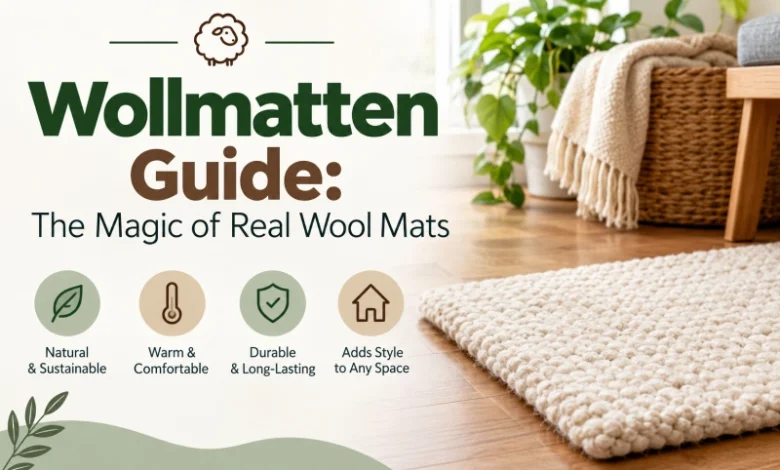
Wollmatten are versatile, high-performance mats made from raw sheep’s wool or compressed felt fibers that provide exceptional natural insulation, moisture management, and comfort. Unlike synthetic alternatives made from petroleum, these traditional textiles use the biological properties of animal fibers to regulate temperature and resist odors naturally.
Let’s look at the science for a second. A single sheep’s wool fiber can absorb roughly 30% of its own weight in water vapor without feeling damp or clammy to the touch. This happens because the fiber core contains porous proteins that trap moisture while the outer layer remains water-repellent. If you have ever stepped onto a synthetic polyester mat after a shower or during exercise, you know that slippery, cold puddle feeling. Genuine wool completely prevents that.
The manufacturing process determines how the final product behaves. Some mats utilize raw virgin wool woven into a backing material, while others rely on heavily compressed felt. The choice impacts everything from cushioning to durability.
The Three Places Where Wool Mats Actually Make a Difference
You will generally find these specialized mats used in three distinct areas of daily life. Each application relies on a different property of the raw material.
1. Your Yoga Practice (The Schurwolle Factor)
If you practice restorative yoga, Yin yoga, or meditation, a high-quality wool mat changes everything. Most commercial yoga studios supply cheap PVC sticky mats. Those are fine for sweaty vinyasa flows where you need absolute grip, but they fail during long, static holds. A premium yoga mat made from pure virgin wool—often labeled as Schurwolle—offers a thick, plush cushion that keeps your joints off the cold hardwood floor.
Imagine holding a pigeon pose for five minutes on a drafty gym floor in December. A thick wool mat acts as a thermal shield, keeping your body heat right where it belongs. Most high-end options feature a natural latex coating on the bottom side to prevent the mat from sliding around when you shift your weight.
2. The Garden (Natural Weed and Frost Protection)
Coarse, unwashed wool mats are becoming a staple for organic gardeners. Instead of using black plastic sheeting that suffocates the soil and leaves microplastics behind, you lay down a biodegradable wool barrier around your tomato plants or berry bushes.
Take a typical raised bed setup. A three-foot strip of gardening wool stops weed seeds from receiving sunlight while allowing rainwater to seep through effortlessly. As the fibers slowly break down over a twelve-month period, they release nitrogen, sulfur, and potassium directly into the dirt, feeding your plants while protecting their roots from early spring frosts.
3. Home Insulation (Quiet Acoustic Barriers)
Thick, industrial felt mats are frequently tucked away inside walls and under hardwood flooring. Because the curly fibers trap millions of microscopic air pockets, they are incredible at deadening sound waves.
Consider a standard apartment renovation where footstep noise travels straight down to the neighbors downstairs. Installing an eight-millimeter felt underlay beneath the engineered wood flooring cuts impact sound transmission by over 20 decibels. It also serves as a fire-resistant barrier since natural wool requires incredibly high temperatures to ignite compared to synthetic foam boards.
What Most People Get Wrong When Buying a Wool Mat
Here is the thing: the market is flooded with cheap imitations. A lot of budget brands sell products labeled as “wool comfort mats” that actually contain 40% polyester or acrylic fillers.
Why does this matter? Mixing synthetics with real wool ruins the fiber’s natural self-cleaning properties. Pure wool contains lanolin, a natural wax secreted by sheep that repels dust mites, resists staining, and stops bacteria from multiplying. When you mix in plastic fibers, sweat gets trapped in the synthetic gaps, and the mat starts to smell bad after a few weeks.
Always look for a label that states 100% Schurwolle or pure virgin wool. If the price looks too good to be true—like a large four-foot mat selling for fifteen dollars—it is almost certainly a synthetic blend. Expect to pay a fair price for genuine raw materials that last for a decade.
How Do You Clean and Maintain Real Wool?
People often worry that maintaining these products is a nightmare. They assume one spill will ruin the mat forever.
Actually, it is simpler than you think. Because of the built-in lanolin barrier, dirt usually sits on top of the fibers instead of sinking deep into the core. For regular maintenance, a quick shake outside or a gentle vacuuming with the brush attachment is all you need.
What happens if you spill coffee or mud on it? Do not throw it into a standard washing machine cycle with harsh detergents. The agitation will cause the fibers to lock together tightly, a process called felting, which shrinks your mat into a stiff, tiny square. Instead, spot clean the area using lukewarm water and a specialized wool wash, then let it air dry flat away from direct sunlight.
FAQ Section:
Can I wash my wool yoga mat in the machine?
No, you should avoid standard washing machines because the heat and spinning will shrink and ruin the texture. If the mat is heavily soiled, hand wash it in a bathtub with cool water and a lanolin-safe wool detergent, then press the water out gently with a towel and air dry flat.
Does a real wool mat smell like a sheep?
Freshly unpacked mats sometimes carry a faint, earthy scent due to the natural lanolin content. This is a sign of authenticity and usually disappears completely within a week of open-air exposure.
Are these mats safe for people with wool allergies?
Most people who experience skin irritation from coarse wool sweaters find that high-grade virgin wool mats do not cause the same reaction because the fibers are softer and rarely come into direct, rubbing contact with sensitive skin during daily use. However, if you have a diagnosed lanolin allergy, you should opt for a different natural material like organic cotton or cork.
How long does a wool garden mat last before breaking down?
A typical outdoor mat used for mulching lasts between one and two growing seasons, depending on your local rainfall and soil microbial activity. It completely biodegrades into the earth, leaving behind zero toxic residues.
Conclusion:
Invest in a genuine, 100% pure wool mat if you want superior insulation and natural self-cleaning properties, but always check the fabric labels carefully to avoid synthetic blends that trap odors and ruin the experience.