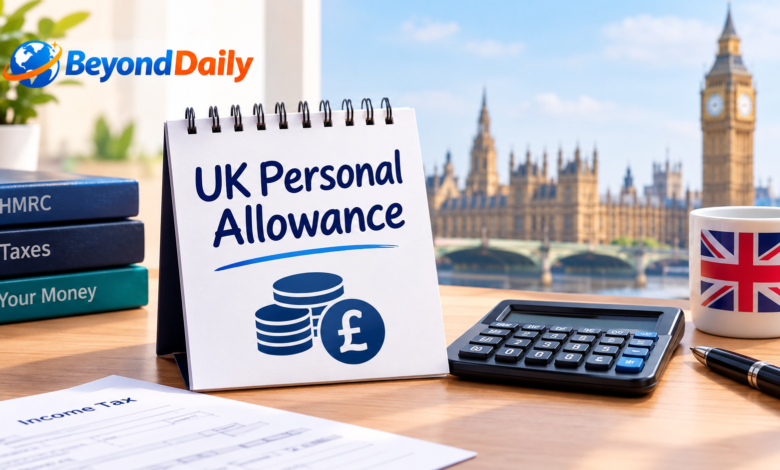
Understanding how much of your income can be received before Income Tax becomes payable is an important part of managing your finances. For the 2026/27 tax year, the standard UK Personal Allowance is £12,570. This means an individual with the standard allowance can generally receive up to that amount of taxable income before Income Tax applies. The current tax year runs from 6 April 2026 to 5 April 2027.
The £12,570 figure is not simply a separate payment or benefit. Instead, it is an amount of income that is normally available before Income Tax is charged. Your circumstances can affect how much allowance you receive, particularly if your adjusted net income is above £100,000 or if you qualify for additional allowances. Understanding these rules can help employees, pensioners and self-employed people interpret their tax position more accurately.
What the UK Personal Allowance Means
The UK Personal Allowance is the amount of income an individual can normally receive before paying Income Tax. For 2026/27, the standard figure is £12,570, the same amount that applied in 2025/26. In practical terms, someone with £30,000 of taxable income and the standard allowance would normally have £12,570 removed from the amount subject to Income Tax before the applicable tax rate is applied.
This does not mean every person earning below £12,570 has exactly the same tax position in every circumstance. Income can come from employment, self-employment, pensions, savings, dividends or property, and different tax rules can apply to different types. Your allowance can also be affected by your income level and personal circumstances. For this reason, the £12,570 figure should be viewed as the standard starting point rather than a guarantee of an identical tax outcome for everyone.
UK Personal Allowance 2026/27 Amount and Key Figures
For the 2026/27 tax year, the standard allowance is £12,570. The government has also maintained the Personal Allowance income limit at £100,000. Once adjusted net income exceeds that threshold, the allowance is reduced by £1 for every £2 of income above £100,000. This taper continues until the allowance has been reduced to zero, meaning high earners can lose the standard tax-free amount entirely.
The 2026/27 figures therefore create three useful reference points. There is the standard £12,570 allowance, the £100,000 income level where tapering begins, and £125,140, where the standard allowance can reach zero. These thresholds are particularly important for people whose earnings are close to £100,000 because relatively small changes in adjusted net income can affect the amount of allowance available to them.
How the Personal Allowance Works With Income Tax
Once your available Personal Allowance has been deducted, the remaining taxable income is considered against the relevant Income Tax bands. In England, Wales and Northern Ireland for 2026/27, the basic rate is 20% on taxable income within the basic-rate band, while higher-rate and additional-rate thresholds apply above it. Scotland has its own Income Tax bands and rates, although the standard allowance remains £12,570.
For example, someone with £35,000 of taxable income and a full £12,570 allowance would normally have £22,430 remaining after the allowance. That remaining amount is what is considered for Income Tax rather than the full £35,000. This illustrates why the allowance matters: it reduces the amount of income exposed to tax before the applicable rates are considered. Your actual calculation can be more complicated where several types of income or additional reliefs are involved.
What Happens to the Allowance for Higher Earners
People with adjusted net income above £100,000 face a different calculation. The allowance is reduced by £1 for every £2 of income above the threshold. For instance, an individual with adjusted net income of £110,000 is £10,000 above the taper point, so the standard allowance would be reduced by £5,000. This leaves an allowance of £7,570 before considering any other applicable rules or reliefs.
The taper is based on adjusted net income rather than simply looking at a basic salary figure. That distinction can matter where someone receives several forms of income or makes certain pension contributions. Once adjusted net income reaches £125,140, the standard allowance is reduced to zero under the current rules. Anyone approaching this range may therefore benefit from checking their complete tax position rather than relying on their employment salary alone.
2025/26, 2026/27 and the Personal Allowance Freeze
The standard allowance remained £12,570 in both 2025/26 and 2026/27. GOV.UK’s current tax tables confirm £12,570 for 2026/27, while the previous-year figures show the same amount for 2025/26. The basic-rate limit also remains £37,700, meaning the standard higher-rate threshold is £50,270 for taxpayers with the full allowance in England, Wales and Northern Ireland.
Current legislation now maintains the £12,570 Personal Allowance through the 2030/31 tax year. The Institute for Fiscal Studies has analysed the effect of the freeze and noted that inflation can reduce the allowance’s value in real terms over time. That is an economic analysis rather than a change to the legal allowance itself: the statutory figure remains £12,570 under the current rules.
UK Personal Allowance for Non-Residents
Living outside the UK Personal Allowance does not automatically mean that an individual cannot receive a UK tax-free allowance. GOV.UK states that certain non-residents may qualify, including British citizens and citizens of EEA countries, while eligibility can also arise under a Double Taxation Agreement with the country where the individual lives. The exact position depends on the person’s circumstances and the applicable international tax rules.
A non-resident who is eligible may need to claim the allowance rather than having it applied automatically. HMRC provides the R43 process for certain people living abroad who receive UK income and want to claim personal allowances or tax refunds. Double Taxation Agreements can also provide relief from UK tax in appropriate circumstances. Anyone living overseas with UK income should check the relevant treaty and HMRC requirements before assuming that the standard allowance applies.
Other Allowances That May Affect Your Tax
The standard allowance is not the only tax allowance that may be relevant. Marriage Allowance can allow an eligible spouse or civil partner to transfer £1,260 of unused Personal Allowance to their partner. HMRC says this can reduce the recipient’s tax by up to £252 for the tax year, subject to the eligibility conditions. The recipient generally needs to be a basic-rate taxpayer, while the transferring partner must meet the relevant requirements.
Blind Person’s Allowance is another separate allowance that can increase the amount of income someone can receive before paying Income Tax. For 2026/27, GOV.UK lists the Blind Person’s Allowance at £3,250. These additional provisions demonstrate why a simple salary figure may not provide the complete picture. When calculating tax, it is sensible to consider eligibility for relevant allowances, deductions and reliefs rather than focusing only on the standard threshold.
Conclusion
The UK Personal Allowance remains £12,570 for the 2026/27 tax year, providing the standard amount of income that can normally be received before Income Tax is charged. The allowance has not increased from 2025/26, and current legislation keeps it at this level through 2030/31. For most taxpayers, this is the central figure to understand when looking at their Income Tax position.
The most important exception is the high-income taper, which begins when adjusted net income exceeds £100,000 and can remove the allowance completely at £125,140. Non-residents and people eligible for additional allowances may have different outcomes. Because tax rules can depend on residence, income type and individual circumstances, checking the latest HMRC guidance is advisable when making an important tax decision.
Frequently Asked Questions
How much is the Personal Allowance in 2026/27?
The standard Personal Allowance for 2026/27 is £12,570.
Has the Personal Allowance increased in 2026?
No, it remains £12,570 for 2026/27, the same as 2025/26.
How much can I earn before paying Income Tax?
With the standard allowance, you can normally receive £12,570 of income before Income Tax applies.
When does the Personal Allowance start to reduce?
It starts reducing when adjusted net income exceeds £100,000.
When does the Personal Allowance become zero?
Under the standard taper, it reaches zero when adjusted net income reaches £125,140.
Can non-residents claim a UK Personal Allowance?
Some non-residents can claim one depending on nationality, circumstances or a relevant Double Taxation Agreement.
What is Marriage Allowance?
Marriage Allowance lets an eligible spouse or civil partner transfer £1,260 of unused allowance to their partner.
Is the Personal Allowance frozen until 2031?
Current legislation keeps the £12,570 allowance in place through the 2030/31 tax year.
Also Read: stock market today uk