
Understanding how an organisation creates value requires more Business Acumen Skills than knowing your own responsibilities. Business acumen involves seeing how different parts of an organisation connect, from finances and customers to strategy, operations and market conditions. The supplied search results describe it as an understanding of how a company operates, makes money and achieves its goals.
For professionals, this wider perspective can make everyday decisions easier to understand. Instead of focusing only on completing a task, you can consider its financial, customer, operational or strategic effect. The aim is not to become an expert in every business function, but to develop enough commercial understanding to ask better questions, recognise consequences and contribute more effectively.
What Are Business Acumen Skills?
Business acumen skills are the knowledge and practical capabilities that help a person understand how an organisation works and how decisions affect its performance. They can include financial literacy, strategic thinking, customer awareness, market knowledge, analytical reasoning, problem-solving and effective decision-making. Different roles may require different combinations, but the underlying principle is understanding the wider business context.
Strong commercial understanding means connecting individual responsibilities with broader objectives. For example, a marketing professional may consider how a campaign affects customer acquisition and revenue, while an operations professional may examine how a process change influences costs, quality and customer experience. This wider perspective helps employees understand why priorities exist rather than simply following them.
Why Business Acumen Matters in the Workplace
Modern organisations depend on people from different functions making decisions that can influence performance. A choice made in one department can affect costs, customer satisfaction, productivity or revenue elsewhere. Developing broader commercial awareness helps professionals recognise these connections and communicate more effectively with colleagues from other areas of the organisation.
Business acumen can also support more informed problem-solving. The supplied search results highlight the importance of connecting everyday work with long-term company goals, anticipating risks, identifying opportunities and allocating resources effectively. This makes commercial understanding relevant not only to senior leaders but also to employees who want to understand the wider impact of their work.
Core Business Acumen Skills to Develop
Financial literacy is one important area. Professionals do not necessarily need advanced accounting qualifications, but understanding income statements, balance sheets, budgets, costs, cash flow and profit margins can provide useful context. The supplied search results specifically identify these financial concepts as part of the core knowledge associated with business acumen.
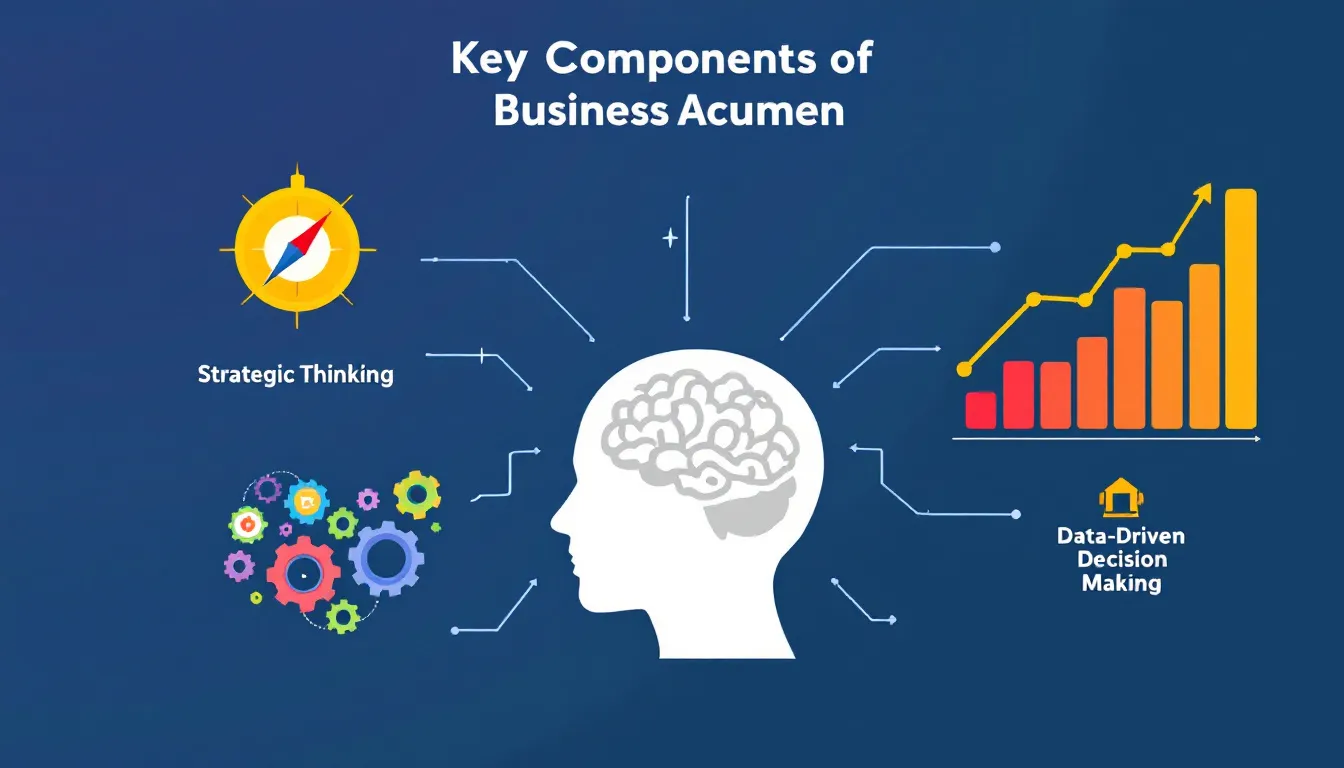
Strategic thinking is another key area. It involves considering where the organisation is heading and how present actions support longer-term objectives. Customer and market orientation are equally valuable because businesses operate within changing markets. Understanding customer needs, competitors and industry trends can help professionals recognise why priorities change and where opportunities or risks may emerge.
Business Acumen Skills Examples
There are many practical examples of commercial understanding in everyday work. Reading a financial report, understanding a departmental budget or recognising how costs influence profitability are straightforward examples. A professional might also use customer feedback to identify changing expectations or examine competitor activity before recommending a new approach.
Decision-making is another important example. Rather than choosing an option solely because it solves an immediate problem, a commercially aware employee can consider cost, customer impact, resources, risks and long-term objectives. The supplied results describe decision-making and problem-solving as involving data analysis and consideration of the wider impact across departments.
How to Develop Business Acumen Skills
A practical starting point is learning how your own organisation makes money and creates value. Study the financial information that is relevant to your role and ask how your department contributes to revenue, customer retention, efficiency or cost control. You do not need to master every financial term immediately. Building understanding gradually can make business discussions much easier to follow.
Customer and industry knowledge can also strengthen your perspective. Speak with customers when your role allows it, follow developments in your sector and pay attention to competitor activity. The supplied search results recommend talking to customers, consuming industry content and taking professional courses as ways to develop commercial knowledge.
How to Improve Business Acumen Skills at Work
Improvement comes from turning knowledge into regular practice. When starting a project, ask what business objective it supports, who benefits from it and what resources it requires. When reviewing a decision, consider both the immediate result and the wider consequences. These simple questions can gradually encourage a more commercially focused way of thinking.
It can also help to learn from colleagues in different functions. Someone in finance can provide insight into budgets and profitability, while colleagues in sales, marketing or operations may offer a different perspective on customers and processes. Over time, these conversations create a broader understanding of how different parts of an organisation interact.
Business Acumen Skills on a CV or Resume
When presenting commercial understanding on a CV, avoid relying only on a generic list of abilities. Instead, demonstrate how you have applied your knowledge. For example, you could describe involvement in budget management, customer analysis, process improvement, market research, strategic projects or data-led decisions where these genuinely reflect your experience.
Specific evidence can make the description more meaningful. Rather than simply stating that you have strong business understanding, explain the business problem you addressed, the information you considered and the contribution you made. This approach shows how knowledge was applied in a real setting and can make your professional experience easier to understand.
Technical and Business Acumen Skills
Technical expertise and commercial Business Acumen Skills awareness serve different purposes, but they can complement one another. A technical professional may understand how a system works while also benefiting from knowing why the organisation invested in it, what customers need from it and how its cost affects wider priorities.
The same principle applies across finance, HR, marketing, operations and technology. Technical knowledge helps professionals perform specialist tasks, while commercial understanding provides context for deciding which tasks matter most and how their results affect the organisation. Developing both perspectives can help employees communicate more effectively across functional boundaries.
Building Stronger Business Acumen Over Time
Business acumen is not something that has to be developed in a single training session. It grows through a combination of learning, observation, discussion and practical experience. Chris Elgood’s definition presented in the supplied search results describes business acumen as a combination of knowledge and skill informed by experience.
A useful development plan can focus on one area at a time. Start with financial basics, then explore strategy, customers, competitors, markets and decision-making. Apply each area to your current role and review what you learn from real workplace outcomes. With consistent practice, business knowledge becomes easier to connect with everyday decisions and responsibilities.
Conclusion
Business acumen skills provide a broader view of how organisations operate, compete and create value. They include areas such as financial literacy, strategic thinking, customer and market awareness, analytical thinking and decision-making. The goal is not to know everything about business, but to understand enough to recognise connections and make informed contributions.
Developing these capabilities starts with curiosity. Learn how your organisation performs financially, understand customers, follow your industry and consider how your work supports wider objectives. The supplied search results similarly point towards financial learning, customer conversations, industry content and professional education as practical development routes.
Frequently Asked Questions
What are business acumen skills?
They are the knowledge and practical abilities used to understand business performance, strategy, customers, finances and decision-making.
What does business acumen mean?
Business acumen means understanding how an organisation operates, creates value, makes money and works towards its objectives.
What are examples of business acumen skills?
Examples include financial literacy, strategic thinking, customer awareness, market knowledge, analytical reasoning and problem-solving.
Why are business acumen skills important?
They help professionals understand the wider impact of their work and make decisions with business objectives in mind.
How do you develop business acumen skills?
Study business financials, understand customers, follow industry developments, learn from colleagues and apply your knowledge to real work.
How can I improve my business acumen skills?
Ask how your work affects customers, costs, revenue and strategy, then use data and workplace experience to improve your understanding.
What business acumen skills should I put on my CV?
Include relevant financial, strategic, analytical, customer or commercial capabilities and support them with genuine examples from your experience.
What is the difference between technical skills and business acumen?
Technical skills relate to specialist expertise, while business acumen focuses on understanding the wider commercial and organisational context.
Also Read: smart business attire