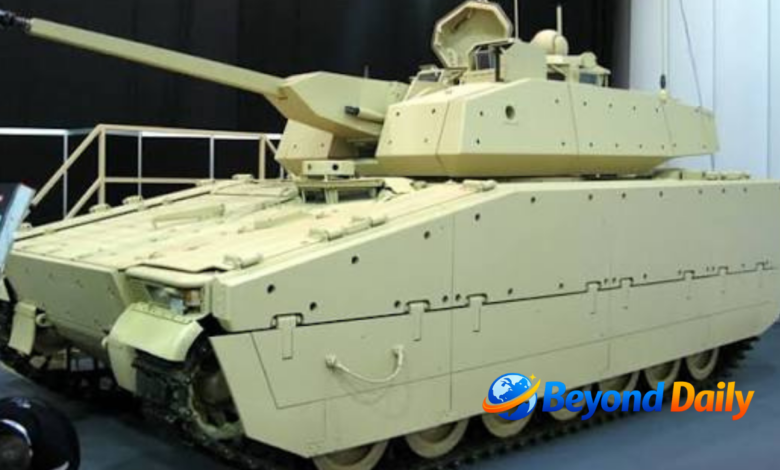
The Combat Vehicle 90 is a Swedish-designed tracked infantry fighting vehicle developed to combine mobility, protection and battlefield firepower in one adaptable platform. Commonly known as the CV90, it was originally created for demanding Scandinavian conditions, including snow, wetlands and forested terrain. Its tracked design, flexible configuration and continuing development have helped establish the vehicle as one of Europe’s better-known modern infantry fighting vehicle families.
The Combat Vehicle 90 has evolved significantly since its introduction, with successive versions receiving improved armour, engines, weapons, sensors and electronic systems. Rather than being a single fixed specification, the CV90 represents a family of vehicles adapted for different military requirements. This guide explores its history, design, specifications, armament, protection, mobility, variants, CV90 MkIV developments and growing international importance.
Swedish Combat Vehicle 90 History and Development
The Swedish combat vehicle 90 originated during the Cold War, when Sweden sought a modern infantry fighting vehicle capable of operating effectively across the country’s challenging landscape. Development was led by Hägglunds, with Bofors contributing expertise in weapon systems. The resulting vehicle was designed around the needs of mechanised infantry, combining the ability to carry troops with the mobility and firepower needed to support them.
The first CV90 vehicles entered Swedish service during the 1990s, marking the beginning of a development story that would continue for decades. Engineers progressively introduced stronger protection, more capable engines, improved sights and sophisticated electronic equipment. This upgrade philosophy became a major strength of the platform, allowing the basic design to adapt to changing battlefield requirements without losing its original emphasis on mobility.
Combat Vehicle 90 Design and Engineering
The Combat Vehicle 90 uses a tracked chassis designed to deliver reliable off-road mobility across difficult surfaces. Its Scandinavian origins influenced the vehicle’s ability to operate in snow, mud, forests and wetlands, where terrain can restrict heavier or less adaptable platforms. The suspension, powertrain and overall vehicle layout were developed to provide useful tactical mobility while carrying an infantry section and supporting them during mechanised operations.
Another important characteristic is the platform’s modular architecture. Different operators can select varying armour packages, weapon systems, electronic equipment and other mission-specific features. As a result, two CV90 vehicles may share the same fundamental design while having noticeably different capabilities. This flexibility has supported international adoption and made it easier for operators to introduce new technologies as their defence requirements have changed.
Combat Vehicle 90 Specifications
CV90 specifications differ according to generation, national configuration and intended battlefield role. Earlier vehicles were generally lighter, while later versions have gained weight through additional armour, larger weapon systems and modern electronic equipment. Depending on the configuration, the platform can reach a road speed of approximately 70 km/h. Engine power, operational range and payload also vary between individual models and upgrade packages.
A conventional CV90 crew normally includes a driver, commander and gunner, with additional infantry accommodated in the rear compartment. The exact troop capacity depends on the particular variant and internal configuration. Weight has also changed considerably throughout the vehicle’s development, with modern versions substantially heavier than some early models. These differences make it important to identify the exact CV90 variant when discussing technical specifications.
Combat Vehicle 90 Armour and Protection
Protection is a major part of the CV90’s continuing evolution. The vehicle uses a modular approach that allows armour and survivability equipment to be adjusted according to operational requirements. Additional protection can increase survivability against battlefield threats, but it also adds weight. Engineers therefore need to maintain a careful balance between protection, mobility, payload and power when developing new configurations.
Modern CV90 versions benefit from protection technologies that were unavailable when the original vehicles were designed. Survivability is not determined by armour alone, however. Crew awareness, sensors, communications, vehicle mobility and tactical positioning all influence how effectively an armoured vehicle can operate. This broader approach has allowed the platform to remain relevant while threats and expectations surrounding infantry fighting vehicles have continued to evolve.
Combat Vehicle 90 Weapons and Firepower
The CV90 family has been produced with several different weapon configurations. The Swedish CV9040 is particularly associated with the 40mm Bofors cannon, giving the vehicle substantial direct-fire capability for an infantry fighting vehicle. Export versions have been equipped with alternative automatic cannon systems, reflecting the preferences of individual operators and the requirements of their armed forces.
Secondary weapons can include machine guns, while selected configurations can also incorporate anti-tank guided missile systems. Modern sights and fire-control equipment further enhance the effectiveness of the primary weapon system by helping crews detect, identify and engage targets. Because armament varies considerably between versions, it is more accurate to discuss the CV90 as a flexible weapons platform rather than assuming every vehicle has identical firepower.
Combat Vehicle 90 Mobility and Battlefield Performance
Mobility has always been one of the defining characteristics of the CV90. Its tracked configuration allows it to travel across difficult terrain while maintaining the ability to support mechanised infantry. The vehicle was designed with the Nordic environment particularly in mind, making performance on snow, mud, uneven ground and forest tracks an important part of its original engineering philosophy.
Later generations have received more powerful engines to compensate for increased weight from armour and equipment. This helps preserve the mobility expected from the platform as additional capabilities are introduced. The CV90 is therefore designed not simply for high road speed, but for tactical movement across varied terrain. Its ability to accompany other armoured formations remains central to its role on the battlefield.
Combat Vehicle 90 Sensors and Electronic Systems
Modern infantry fighting vehicles rely heavily on sensors and electronics, and the CV90 has developed considerably in this area. Later configurations can feature advanced sights, thermal imaging, fire-control systems and digital equipment designed to improve crew awareness. These technologies help commanders and gunners understand their surroundings and make decisions more effectively, particularly when visibility is poor or battlefield conditions are changing rapidly.
Electronic modernisation also allows older CV90 platforms to remain useful for longer. Updated communications and digital systems can improve coordination with other vehicles and battlefield assets, while modern fire-control equipment can increase the effectiveness of existing weapons. Exact systems differ between operators, but the overall trend is clear: electronics have become just as important to modernisation as armour, engine power and weapon upgrades.
Combat Vehicle 90 Variants and Versions
The CV90 is best understood as a broad family rather than one standard vehicle. Sweden developed several configurations, including infantry fighting vehicles and specialised versions for command, observation, air defence and other support roles. The CV9040 became particularly notable for its 40mm armament, while other configurations demonstrate how the common chassis can be adapted to perform very different battlefield tasks.
International operators have introduced further variations based on their own requirements. Some have selected different cannon calibres, protection systems, sensors and communications equipment, while others have incorporated specialised mission equipment. This customisation has been an important factor behind the platform’s international success. It allows customers to acquire a proven vehicle architecture while configuring it around their own doctrine, terrain and operational priorities.
CV90 MkIV Features and Improvements
The CV90 MkIV represents a modern stage in the platform’s long development history. It introduces greater engine power and increased capacity for modern equipment, helping the vehicle handle the additional demands created by heavier protection and advanced systems. The MkIV is therefore not simply a cosmetic update but an extensive modernisation intended to preserve mobility and capability as the vehicle becomes more technologically sophisticated.
Digital architecture, improved fire-control capabilities and greater upgrade potential are important aspects of the MkIV concept. Modern military vehicles must integrate sensors, communications and information systems alongside traditional armour and weapons. The MkIV reflects this changing requirement by providing a platform capable of supporting sophisticated battlefield technologies while retaining the fundamental tracked mobility and infantry support role associated with the CV90 family.
International Operators and Export Success
The international success of the CV90 demonstrates how a vehicle originally designed for Sweden developed into a wider European defence platform. Several countries have selected CV90 variants, often requesting modifications to suit their own military requirements. These differences can involve armour, weapon systems, sensors, communications equipment and internal arrangements, creating a diverse family of vehicles based on the same underlying architecture.
Industrial cooperation has also contributed to the platform’s success. Procurement programmes can involve local production, assembly and manufacturing partnerships, helping customer nations develop or strengthen domestic defence capabilities. For operators, the combination of an established design, upgrade potential and national customisation can be attractive when replacing older infantry fighting vehicles. Continued investment has consequently helped sustain the CV90 well beyond its original Swedish requirements.
Combat Vehicle 90 News and Recent Developments
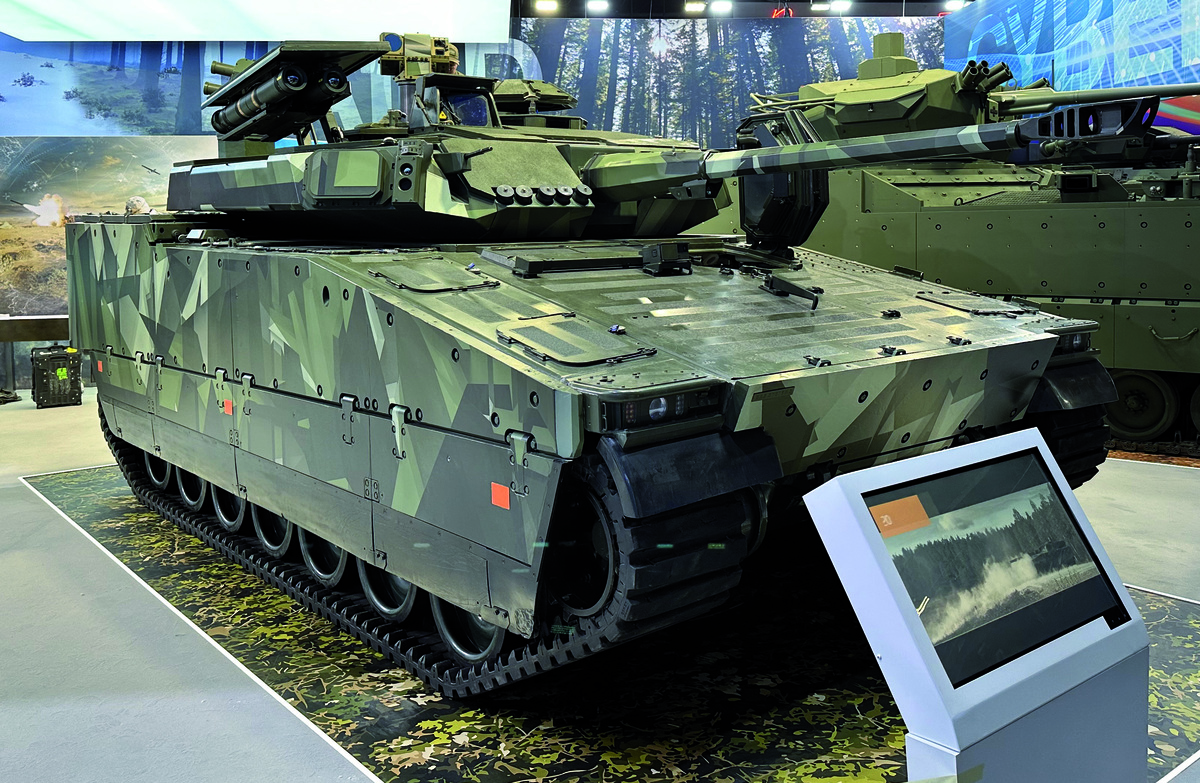
Recent combat vehicle 90 news has reflected continued European interest in modern tracked infantry fighting vehicles. Procurement activity, production programmes and local assembly initiatives have placed the CV90 within wider discussions about European defence modernisation. The vehicle’s continuing development is particularly relevant as several countries seek to strengthen mechanised forces and replace ageing armoured platforms with more adaptable systems.
Current developments also demonstrate the importance of industrial capacity alongside military capability. New manufacturing and assembly arrangements can involve cooperation between governments, established defence companies and national industry. At the same time, modernisation programmes continue to focus on protection, mobility, firepower and electronic systems. For readers following CV90 developments, distinguishing confirmed contracts and production activity from proposals is essential when assessing new reports.
Combat Vehicle 90 Compared With Other IFVs
The CV90 competes within a broad category of modern infantry fighting vehicles that includes platforms such as the M2 Bradley, Puma and ASCOD family. Each has been developed around different national requirements and operational philosophies. Consequently, comparisons based on a single specification can be misleading. Factors such as terrain, protection requirements, troop capacity, weapon configuration, logistics and upgrade potential all influence an army’s choice.
The CV90’s combination of mobility, modularity and long-term development is among its notable strengths. Other IFVs may provide different balances of protection, firepower, internal capacity or technology. Rather than identifying one vehicle as universally superior, a meaningful comparison should examine the requirements of the intended operator. The CV90’s extensive range of configurations shows how adaptability can be as important as any individual headline specification.
Why the CV90 Remains Important
The continuing importance of the CV90 is closely connected to its ability to evolve. Since entering service, the platform has received generations of improvements covering armour, propulsion, weapons, sensors and digital systems. This approach has enabled operators to enhance capability while retaining an established chassis and support structure, potentially reducing the disruption associated with replacing an entire vehicle fleet.
The platform’s international adoption provides another indication of its long-term value. Different nations can tailor the CV90 to their own environments while benefiting from a mature vehicle family. Its combination of tracked mobility, substantial firepower, adaptable protection and modernisation potential makes it suitable for a range of mechanised roles. These characteristics help explain why the platform continues to feature prominently in European armoured vehicle discussions.
Future of the Combat Vehicle 90
The future of the Combat Vehicle 90 is likely to involve continued upgrades rather than a complete departure from its established architecture. Improvements in sensors, communications, protection, digital systems and battlefield networking can add new capabilities while preserving the fundamental vehicle. The modular approach makes it easier to accommodate emerging technologies as military requirements develop and operational environments become increasingly complex.
Future versions may place even greater emphasis on networked operations, advanced situational awareness and integration with unmanned systems. Electronic resilience and information sharing are also becoming increasingly important alongside traditional firepower and armour. The CV90’s long development history suggests that its ability to accept new equipment will remain one of its strongest advantages as operators look for sustainable ways to modernise their mechanised forces.
Conclusion
The Combat Vehicle 90 has developed from a Swedish infantry fighting vehicle designed for demanding Nordic conditions into an internationally recognised armoured vehicle family. Its tracked mobility, adaptable protection, varied armament and continuous technological development have allowed it to remain relevant through several generations. The platform demonstrates how a well-designed military vehicle can evolve alongside changing operational requirements.
From the Swedish CV9040 to modern MkIV configurations, the CV90 story is one of continuous adaptation. Different operators have introduced their own weapons, electronics and protection packages, creating a versatile family rather than a single fixed design. Its ongoing procurement, modernisation and industrial development indicate that the CV90 is likely to remain an important part of European mechanised warfare for years to come.
Frequently Asked Questions
What is the Combat Vehicle 90?
The Combat Vehicle 90 is a Swedish-designed tracked infantry fighting vehicle, commonly known as the CV90. It combines infantry transport with protection, mobility, sensors and direct-fire capability.
Is the CV90 a Swedish vehicle?
Yes. The CV90 was originally developed in Sweden for the Swedish armed forces. It has since been produced in numerous configurations for international operators.
How fast is the CV90?
Depending on its specific configuration, the CV90 can achieve a road speed of approximately 70 km/h. Actual performance varies according to weight, engine and equipment.
What weapons does the CV90 use?
Armament depends on the variant. Swedish CV9040 vehicles are associated with a 40mm Bofors cannon, while other versions use different automatic cannons, machine guns and, in selected configurations, anti-tank guided missiles.
How many soldiers can a CV90 carry?
Troop capacity varies between versions. A typical CV90 carries a crew consisting of the driver, commander and gunner, together with a group of infantry in the rear compartment.
What is the CV90 MkIV?
The CV90 MkIV is a modern generation of the vehicle family featuring increased engine power, updated digital systems, improved fire-control capabilities and greater capacity for modern equipment.
Which countries operate the CV90?
The CV90 family is operated by several European countries, including Sweden. Other operators use customised versions featuring different combinations of weapons, armour and electronic systems.
Why was the CV90 designed for Nordic conditions?
The original CV90 was developed for Sweden’s challenging operating environment. Its tracked configuration and engineering were intended to support mobility across snow, wetlands, forests, mud and uneven terrain.
Is the CV90 an infantry fighting vehicle?
Yes. Its primary role is as an infantry fighting vehicle, allowing mechanised infantry to travel with armoured protection while receiving direct fire support from the vehicle’s weapon systems.
Why is the CV90 still relevant today?
The CV90 remains relevant because its modular design allows continuous upgrades. Modern versions can incorporate improved protection, propulsion, sensors, electronics and weapons without abandoning the fundamental platform.
Also Read: kingston near lewes