
Opening a café can begin with something as simple as a love of great coffee, but turning that idea into a sustainable business requires careful planning. A coffee shop business plan UK entrepreneurs can rely on brings the concept, target market, operating model and finances into one practical document. It gives you an opportunity to test your assumptions before committing money to premises, equipment, stock, staff and marketing.
A good plan is also useful beyond the launch stage. It can become a working document that helps you monitor sales, control spending and identify opportunities for growth. If you are approaching a lender, investor or funding provider, a clear plan can also demonstrate that you have considered your market, costs, cash flow and commercial objectives rather than relying solely on enthusiasm.
Define Your Coffee Shop Concept and Target Customers
Your concept should explain what makes the café worth visiting when customers already have plenty of coffee shops to choose from. You might focus on speciality coffee, quick takeaway service, brunch, premium pastries, remote-working customers or a neighbourhood setting. Your menu, décor, service style and pricing should all support the same proposition. A focused concept can make later decisions about location, suppliers and marketing much easier.
Your target customer should be described in practical terms rather than simply as “coffee lovers”. Consider whether you are targeting commuters, students, local residents, families, office workers or visitors. Think about when they are likely to buy, what they may spend and what they expect from the experience. This information can influence your opening hours, seating capacity, menu design, pricing and promotional strategy.
Research the UK Coffee Shop Market and Competition
Market research is one of the most important sections of a coffee shop business plan UK start-ups should prepare before selecting a premises. Visit potential locations at different times and observe pedestrian traffic, nearby businesses, parking, public transport and competing cafés. Look at what competitors sell, how they price their products, how busy they appear and what customer groups they attract.
Competition does not automatically mean a location is unsuitable. Established cafés can indicate that customers already spend money in the area. The more important question is whether your business can offer a clear reason to choose it. Research can reveal opportunities such as faster service, better speciality coffee, stronger food options, quieter seating or a more convenient location.
Calculate Coffee Shop Start-Up Costs
Start-up costs can vary considerably depending on the premises, location, concept and equipment requirements. Your budget may need to include rent deposits, legal and professional fees, refurbishment, furniture, signage, espresso equipment, grinders, refrigeration, ovens, display units, tills, technology, initial stock and launch marketing. You should also allow for unexpected expenses rather than allocating every pound to planned purchases.
Working capital deserves particular attention because opening day does not guarantee immediate profitability. Your business may need money for wages, rent, utilities, stock and other operating expenses while customer numbers develop. A sensible plan therefore separates one-off start-up expenditure from recurring costs. This makes it easier to understand how much funding is genuinely required to reach a stable trading position.
Build Your Coffee Shop Financial Plan
The financial section should turn your business idea into measurable assumptions. Estimate the number of customers you expect, average transaction value, opening days and likely sales across different periods. Then calculate direct costs and overheads to understand your expected gross profit and operating position. It is better to use cautious assumptions that you can explain than optimistic figures designed simply to make the plan look attractive.
Cash flow should be considered separately from profitability. A café may record sales while still experiencing periods when cash is tight because of rent, wages, supplier payments, equipment costs or other commitments. Your coffee shop business plan UK document should therefore include a cash-flow forecast and a break-even calculation. Testing different sales scenarios can also show how the business might respond if revenue is lower than expected.
Plan Operations, Staffing and Suppliers
A successful coffee shop depends on consistent daily operations. Your plan should explain who will open and close the premises, prepare drinks and food, serve customers, manage tills, receive deliveries and maintain cleaning standards. Staffing requirements will depend on opening hours, seating capacity, menu complexity and expected customer volumes. Training should cover service standards, product knowledge, food safety and the practical workflow behind the counter.
Supplier planning is equally important. Identify reliable sources for coffee, milk, food ingredients, packaging and cleaning products, and understand delivery schedules and minimum orders. Stock control can help reduce waste and protect margins, particularly for fresh food and ingredients with limited shelf lives. Building relationships with dependable suppliers can also make it easier to maintain consistent quality as your customer base grows.
Understand UK Legal and Food Safety Requirements
Legal preparation should begin before you commit to a property. In the UK, food businesses generally need to register with their local authority, and the Food Standards Agency provides guidance for businesses handling food. Registration requirements and other obligations can depend on the nature of the operation and location, so your plan should identify the relevant local authority requirements early.
Premises and licensing matters should also be investigated before opening. Planning considerations, outdoor seating permissions, music licensing, insurance and employment responsibilities may all be relevant depending on your business model. Rather than treating compliance as paperwork at the end of the project, include these requirements within your opening timeline and budget so that they do not create avoidable delays.
Create a Marketing Strategy for Your Coffee Shop
Marketing should begin before the doors open. A recognisable brand, useful website and accurate Google Business Profile can help potential customers discover the café. Local SEO is particularly valuable because many customers search for cafés, coffee and food options based on their immediate location. Your online presence should communicate the concept clearly and make essential information such as opening hours and location easy to find.
After launch, encourage genuine customer reviews and maintain a consistent social media presence. You could highlight new drinks, seasonal products, behind-the-scenes preparation or local partnerships. Loyalty incentives and community-focused promotions may also encourage repeat visits. The strongest marketing strategy is not necessarily the loudest one; it is the strategy that consistently reaches the people most likely to become regular customers.
Coffee Shop Business Plan UK PDF and Free Template Options
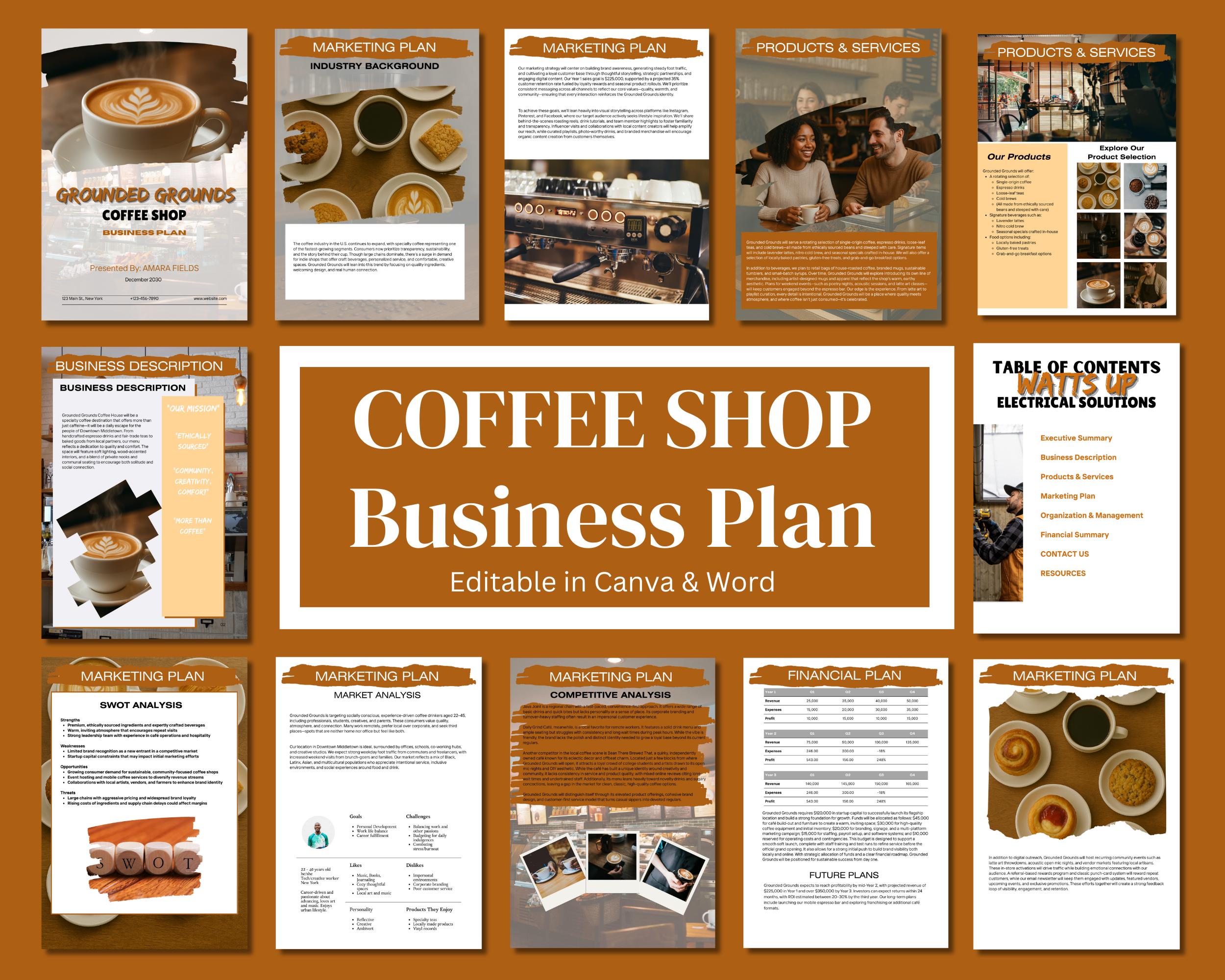
Searching for a coffee shop business plan UK PDF or free template can be a useful starting point, particularly if you have never prepared a business plan before. Templates can help you structure sections covering the business concept, market research, marketing, operations and financial projections. However, a generic template should be treated as a framework rather than a finished plan.
Your final document needs to reflect your own circumstances. Replace generic market statements with research from your intended area, use realistic supplier quotations where possible and build financial forecasts around your actual pricing and expected customer numbers. GOV.UK and Start Up Loans also provide business-planning guidance that can help entrepreneurs understand the information commonly required when developing a new venture.
Common Mistakes to Avoid When Planning a Coffee Shop
One common mistake is concentrating heavily on the appearance of the café while giving insufficient attention to the numbers. Attractive furniture and impressive equipment may contribute to the customer experience, but excessive initial spending can put pressure on cash flow. Your plan should distinguish between purchases that directly support the business and expenses that can be delayed until revenue becomes more predictable.
Another problem is assuming that strong footfall automatically produces strong sales. Customers still need a reason to enter, purchase and return. Poor location analysis, unrealistic sales forecasts, insufficient working capital and weak differentiation can all create difficulties. Review your assumptions regularly and update the plan as you obtain real sales data. A business plan should evolve with the business rather than remain a document that is never opened after launch.
Conclusion
A well-prepared coffee shop business plan UK entrepreneurs can use as a practical roadmap should cover much more than an attractive café concept. It should connect your target customers, location, competition, menu, operations, staffing, marketing and financial forecasts into one coherent strategy. This process can expose weaknesses early, when changing an assumption is considerably easier than changing an expensive business decision.
Whether you are developing a speciality coffee shop, neighbourhood café or takeaway-focused concept, realistic planning gives you a clearer view of what the venture requires. Use reliable research, cautious financial assumptions and appropriate UK regulatory guidance, then revisit the plan as your business develops. With the right preparation, your plan becomes a useful management tool rather than simply a document created for funding.
Frequently Asked Questions
How much does it cost to open a coffee shop in the UK?
Costs vary widely according to location, premises, refurbishment, equipment, staffing and the amount of working capital required.
What should a coffee shop business plan include?
It should normally cover the concept, target market, competition, marketing, operations, staffing, start-up costs, financial forecasts and funding requirements.
Can I get a free coffee shop business plan template?
Yes, free business-plan templates and guidance are available online, but you should customise any template with your own research and financial figures.
Do I need a business plan to get coffee shop funding?
A lender or funding provider may ask for a business plan or financial information to understand the business model, costs and ability to repay funding.
How profitable can a UK coffee shop be?
Profitability depends on sales volume, pricing, gross margins, rent, staffing, utilities, waste and many other operating costs.
What licences does a coffee shop need in the UK?
Requirements vary according to the activities and location, but food business registration and relevant premises, planning, insurance and licensing requirements should be investigated.
How do I choose a coffee shop location?
Assess customer demographics, footfall, visibility, accessibility, nearby businesses, competition, rent and the suitability of the premises before committing.
How much working capital should a new café have?
There is no single figure for every café, so calculate expected operating costs and build a cash-flow forecast that accounts for the period before sales stabilise.
Also Read: startup business ideas uk