Crochet is a relaxing and practical craft that can be learnt without a large collection of equipment or years of experience. If you are completely new, the key is to begin with a few simple techniques rather than trying to master everything at once. This guide to crochet for beginners UK explains what you need, which stitches to learn first, how to practise effectively and where to find easy projects.
Getting Started With Crochet
One of the biggest advantages of crochet is that you can start with just a hook, some yarn and a little patience. You do not need an expensive setup or a dedicated craft room. A comfortable chair, good lighting and a small amount of uninterrupted practice can be enough. Beginners often find that the first few attempts feel unfamiliar, but the basic movements become much easier with repetition.
When learning crochet for beginners UK, it is also useful to understand that UK and US terminology can differ. For example, a UK double crochet is known as a single crochet in US terminology, while a UK treble crochet corresponds to a US double crochet. Checking which terminology a pattern or video uses before starting can prevent confusion and help you follow instructions accurately.
Choosing Your First Crochet Hook and Yarn
For a first project, choose a smooth, medium-weight yarn that allows you to see individual stitches clearly. Very fluffy, dark or highly textured yarn can make it difficult to identify where the hook should go. A medium-sized hook, such as one around 4mm to 5mm, is often comfortable for practising basic stitches, although the ideal size depends on the yarn and the project instructions.
A simple crochet for beginners UK kit does not need to contain dozens of accessories. Start with a suitable hook, yarn, scissors, a yarn needle and a few stitch markers. A tape measure can also be useful when working on projects that need specific dimensions. Keeping your first kit simple makes it easier to concentrate on learning the movements instead of worrying about unnecessary equipment.
Learning the Essential Crochet Techniques
The first skills to practise are holding the hook, controlling the yarn and creating a slipknot. From there, the foundation chain is an important building block for many projects. Try making several chains slowly, paying attention to how tightly you pull the yarn. If your chain becomes extremely tight, the hook may struggle to pass through the loops in the following row.
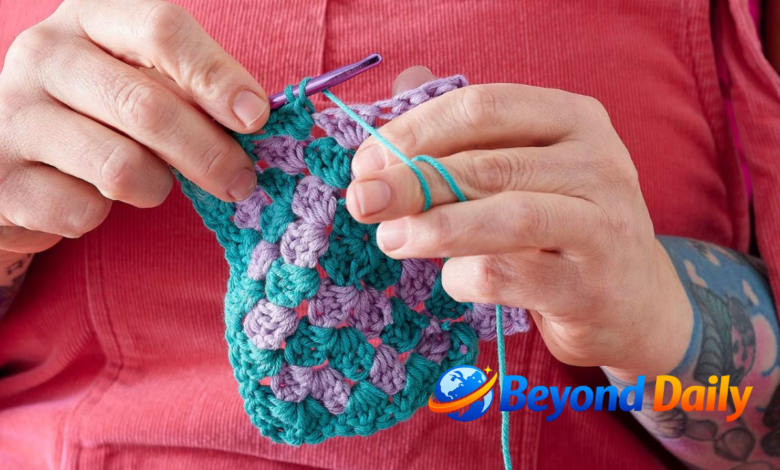
After learning the chain, practise working stitches into it and turning your work at the end of a row. This is where consistent tension becomes important. Do not worry if your first rows look uneven. Beginners naturally use different amounts of tension as they learn, and regular practice helps the hands develop a more comfortable rhythm. Finishing your work neatly and sewing in the ends are also useful early skills.
Understanding Basic Crochet Stitches
The foundation of easy crochet for beginners is learning a small number of stitches well. Start with the UK double crochet because it is straightforward and useful for many simple projects. Once you feel comfortable, move on to the UK half treble and UK treble. Learning these stitches gradually gives you a useful foundation without overwhelming you with complicated techniques.
If you are specifically searching for how to double crochet for beginners UK, practise making several rows using the same stitch before moving to another pattern. Count your stitches at the end of each row so you can spot accidental increases or decreases. This simple habit can prevent projects from becoming wider or narrower and will help you understand how crochet patterns are constructed.
Finding Easy Crochet Projects and Free Patterns
The best first projects are usually small enough to finish without requiring weeks of practice. A simple dishcloth, coaster, small square, headband or scarf can provide useful experience while keeping the instructions manageable. Repeating the same stitch also gives you time to improve your tension and recognise what correctly formed stitches look like.
Free crochet for beginners UK patterns can be particularly useful when you are learning because they allow you to experiment without committing to a paid pattern. Look for descriptions such as beginner, easy or suitable for new crocheters. Before starting, read the entire pattern once and check the recommended yarn, hook size, terminology and finished measurements so you know what to expect.
Using Videos and Online Resources to Learn
Video tutorials can be especially helpful because crochet involves movements that can be difficult to understand from written instructions alone. Beginner crochet YouTube lessons can show exactly how the hook enters a stitch, how yarn is wrapped and how loops are pulled through. You can pause, rewind and repeat individual sections rather than trying to learn an entire technique in one sitting.
When choosing a crochet for beginners UK video, look for tutorials that clearly identify whether they use UK or US stitch terminology. A slow demonstration with close-up views is generally easier to follow than a fast project tutorial. You can also combine videos with written patterns, using the video to understand the technique and the pattern to practise independently once you feel more confident.
Exploring Tunisian and Left-Handed Crochet
Tunisian crochet is a related technique that creates a distinctive fabric and uses a different approach from traditional crochet. It can be interesting for beginners who want to explore another style once they understand basic crochet movements. However, there is no need to start with Tunisian crochet immediately. Learning conventional stitches first can give you a useful foundation for understanding how loops and rows are formed.
Left handed crochet for beginners UK learners may need slightly different demonstrations because many tutorials show the hook being held in the right hand. The underlying techniques remain accessible, but the visual orientation can feel different. Look for left-handed tutorials where the instructor demonstrates each movement from an appropriate angle. Working slowly and focusing on how stitches are formed rather than simply copying hand positions can make learning easier.
Building Confidence With Practice
Learning crochet is less about getting every stitch perfect immediately and more about becoming familiar with the basic movements. Set aside short practice sessions and repeat the same stitch until your hands begin to move naturally. If your tension changes between stitches, slow down rather than pulling the yarn harder. Relaxed hands and steady movements generally make practising more comfortable.
As your confidence grows, try projects that introduce one new skill at a time. You might move from rows of double crochet to simple colour changes, then eventually explore increases, decreases and more detailed patterns. Keep your early projects because they provide a useful record of your progress. Comparing your first sample with later work can show how much your tension, stitch definition and overall confidence have developed.
Conclusion
Crochet can be a rewarding craft for anyone willing to begin with the basics and practise gradually. You do not need specialist equipment or advanced knowledge to make your first project. Start with a comfortable hook, suitable yarn, a foundation chain and a few essential stitches. Once those movements become familiar, you can explore patterns, videos, different yarns and more creative techniques.
The most important part of crochet for beginners UK is choosing a manageable starting point and giving yourself time to learn. Mistakes are a normal part of the process, and unpicking a few stitches is often how you discover what went wrong. Begin with a small project, practise consistently and build your skills one technique at a time.
Frequently Asked Questions
What is the easiest thing to crochet for a beginner?
Small squares, coasters, dishcloths and simple scarves are good starting projects because they use basic stitches and repetitive techniques.
Can I learn crochet by myself?
Yes, many people learn through written patterns, books and online video tutorials, although practising with an experienced crocheter can also be helpful.
What crochet hook should a beginner use?
A medium-sized hook around 4mm to 5mm is often a comfortable starting point, but always check the recommended hook size for your chosen yarn or pattern.
What yarn is best for crochet beginners?
Smooth, medium-weight yarn in a light or medium colour is usually easiest because individual stitches are simpler to see.
Is crochet easier than knitting?
Both crafts have a learning curve, and which feels easier depends on the individual. Crochet uses one main hook and can be straightforward to practise independently.
What is the first crochet stitch to learn?
The foundation chain followed by the UK double crochet is a useful starting point for learning how crochet stitches are formed.
Where can I find free crochet patterns?
Free patterns are available from craft websites, designer blogs, online crochet communities and other resources offering beginner-friendly projects.
Can left-handed people learn crochet?
Absolutely. Left-handed crocheters can learn the same fundamental techniques by following suitable left-handed demonstrations and practising the movements at a comfortable pace.
Also Read: home based business uk